Your symptoms point to slow, impaired methylation — and a high likelihood of underlying genetic markers.

You're sleeping a full night and still waking up depleted. You've tried the obvious things and they haven't moved the needle. What you're describing is the pattern of a methylation cycle that's been running well below capacity, often driven by genetic variants behind the scenes.

The reason your symptoms cluster the way they do

Methylation is the cycle your body runs constantly to make energy, build neurotransmitters, regulate mood, and clear stress hormones. When it doesn't keep up, it doesn't fail in one place — it underperforms across all of them.

The mechanism: methylation depends on converting folate (B9) into its active form, 5-MTHF, which then helps produce SAMe, the body's universal methyl donor. When that conversion runs slowly, SAMe drops and homocysteine accumulates — a marker independently linked to cognitive and cardiovascular issues. Standard folic acid doesn't fix this; it has to go through the same conversion step.

Here's what most newer "methylated" formulas miss: handing your body methylfolate and methyl-B12 isn't enough on its own. Without the supporting methyl donors and cofactors — TMG, riboflavin, B6 — the cycle either stalls or spikes erratically, leaving people overstimulated or flat. The form matters. The full stack matters more.

40%
carry an MTHFR variant that affects folate conversion
70%
drop in enzyme activity for people who carry two copies of the C677T variant
10%
people carry two copies of the variant — the form linked to the largest drop in methylation capacity.
The form of B-vitamin matters. The supporting cofactors matter more.

How impaired methylation is likely showing up for you

1
2
3
4

BRAIN & FOCUS

Methylation produces the neurotransmitters that steady mood and sharpen focus — dopamine, serotonin, and norepinephrine among them. When the cycle slows, production drops.

The result: brain fog, mental fatigue, low or flat mood, and the sense of pushing through mental molasses by mid-afternoon.

ENERGY & STAMINA

Methylation supports cellular energy production at the most fundamental level — by helping produce CoQ10 and carnitine, two molecules your mitochondria depend on to convert food into ATP.

When the methylation cycle slows, both drop, and energy production runs less efficiently. You sleep a full night and wake up still depleted. The afternoon wall comes earlier. Your energy stops matching the effort you're putting in.

DETOX & RESILIENCE

Methylation is central to how your body clears what it doesn't need — used hormones, the byproducts of daily stress, and environmental exposures including heavy metals. It does this in part by supporting the production of glutathione, the body's primary antioxidant and one of its main mechanisms for processing what comes in from outside.

When methylation slows, glutathione production drops with it. People at your stage often notice heightened sensitivity to alcohol, caffeine, supplements, or environmental triggers — and a slower bounce-back from anything taxing.

HORMONES & STRESS

Methylation is the primary pathway for clearing estrogen and stress hormones like adrenaline once your body has used them. When clearance slows, both linger longer than they should.

The signs: PMS or cycle changes, heightened irritability, restless sleep, and the wired-but-tired feeling of running on adrenaline that won't switch off.

1
2
3
4

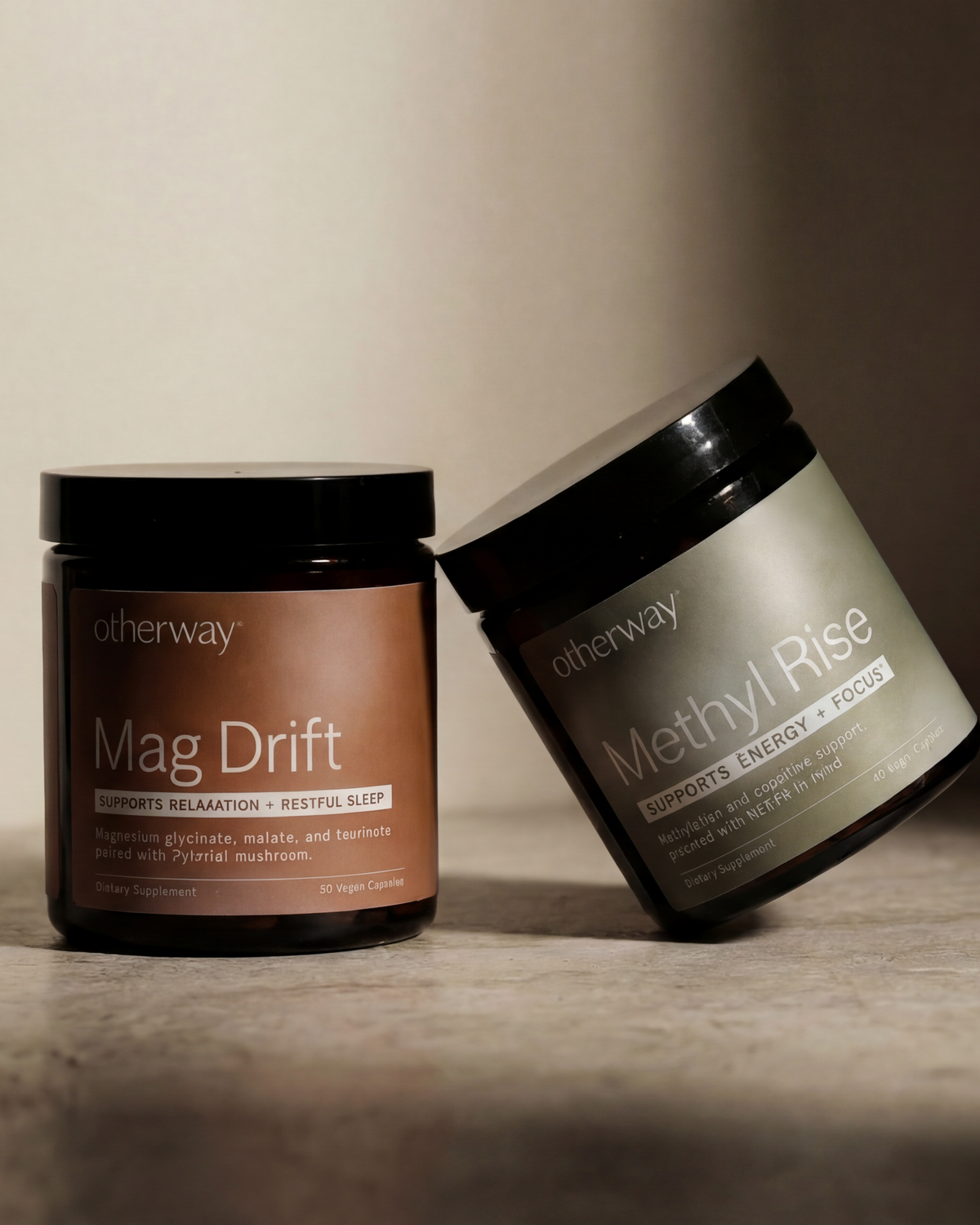
For a pattern like yours, the Methylation Duo is where we'd start — alongside proper testing

Methyl Rise is a cognitive and energy stack. Alongside the active forms of folate and B12, it includes the supporting methyl donors most B12/folate formulas leave out — plus nootropic compounds for focus and steady energy.

Mag Drift uses a tri-blend of highly absorbable magnesium to support nervous-system and cellular health, plus Xylaria for restful sleep support. The calmer counterpart to Methyl Rise's daytime lift.

Loved by many, optimizing their methylation

"OTHERWAY’s thoughtful supplement really had a huge impact on my daily life. Ever since I started taking the Methyl Rise every morning, I feel so much energy and in a very good way. I don’t need tons of coffee anymore."
Jing, 37
Jing, 37
New York, NY
Methyl Rise

Methyl Rise

View Product
"I’ve been using Otherway Methyl Rise for a little over a month now and am already getting such fantastic results. I feel significantly more clear and crisp across the board. I am a regular vitamins & supplements user for sure but Otherway is what my routine has been missing."
Daniel, 34
Daniel, 34
Alabama, US
Methyl Rise

Methyl Rise

View Product
"I’ve noticed a marked improvement in my energy since starting the methyl rise supplements. Grateful to the otherway team for creating this formulation and for their clear and ethical marketing."
Alex B, 52
Alex B, 52
Portland, Oregon
Methyl Rise

Methyl Rise

View Product
"I've really been enjoying Mag Drift — it helps me relax, which is exactly what I was hoping for. It's easy to take and there's no aftertaste, which is usually what stops me from staying consistent with supplements. A really positive experience overall. "
Gabriella, 23
Gabriella, 23
Miami, Fl
Mag Drift

Mag Drift

View Product

An evidence-based approach to optimizing methylation

The active form of folate works where the standard form can't.

In a randomized controlled trial, L-methylfolate at 15 mg outperformed placebo as adjunctive support, with side effects comparable to placebo — while a lower dose did not, suggesting the form and dose both matter. (Papakostas et al., 2012, American Journal of Psychiatry.)

Roughly 1 in 10 people have significantly reduced methylation capacity

The MTHFR C677T variant reduces enzyme activity by about 35% with one copy and up to 70% with two — and the two-copy form appears in roughly 10% of the population. Most never know. (Wilcken et al., 1998; enzyme-activity figures from Bailey & Gregory / NEJM.)

Your folate status shapes your energy and focus, not just your mood

Reviews of B-vitamin and one-carbon metabolism link folate and B12 status to cognitive performance, energy metabolism, and mental clarity — the exact domains this persona feels first. (Smith & Refsum, 2016, Annual Review of Nutrition — verify it covers the cognitive/energy framing specifically.)

Standard folic acid can go unused if your body can't convert it

Research on unmetabolized folic acid shows that in people with reduced MTHFR activity, a meaningful share of synthetic folic acid isn't converted to the usable form — which helps explain why a generic B-complex sometimes does nothing.

The link between methylation and how you feel is well-documented

A large meta-analysis pooling 26 studies and over 22,000 participants found the MTHFR C677T variant associated with measurable differences in how the body processes folate.

Foundational Methylation Support Protocol

This is your foundation. From here, protocols can be personalized — but these basics help almost everyone with MTHFR.

Add

Key Nutrients
L-5-Methylfolate, Methyl B12, Riboflavin (B2), P5P (B6), Betaine (TMG), Magnesium (glycinate or malate), Choline, and antioxidants (glutathione, CoQ10.)

Food Sources

  • Folate-rich greens (spinach, romaine, avocado)
  • Protein sources with choline and methionine (eggs, salmon, grass-fed beef)
  • Beets and quinoa (natural betaine)
  • Cruciferous vegetables (detox cofactors + sulforaphane)
  • Polyphenol-rich foods (berries, olive oil, green tea)
  • Organ meats

Avoid

Reduce methylation blockers and inflammatory stressors:


  • Synthetic folic acid (fortified breads, cereals, cheap supplements)
  • Ultra-processed foods and refined sugars
  • Excess alcohol (depletes methyl donors and B vitamins)
  • High mercury fish such as tuna, king mackerel, and swordfish
  • Smoking and high toxic load exposure

Lifestyle

Regulate the nervous system and optimize cellular performance:


  • Sleep: Aim for 7–9 hours total, including ~1.5 hours of deep sleep and ~2 hours of REM.


  • Stress Management: Practice HRV-balancing techniques (breathwork, meditation, cold exposure)


  • Light Exposure: 10–15 min of morning sunlight within an hour of waking.


  • Movement: 30 min of daily exercise — ideally alternating resistance training and zone-2 cardio.


  • Hydration & Minerals: 2–3 L of mineral-rich filtered water daily to support detox and methylation balance.

Check Your MTHFR Status & Biomarkers

Understand your baseline and progress:


  • Genetic: MTHFR, COMT, MTR/MTRR, BHMT variants


  • Labs: Genova Methylation Panel or Organic Acids Test


  • Bloodwork: Homocysteine, Active B12, Folate, B2/B6, magnesium, methylmalonic acid, heavy metals, C-Reactive Protein


  • Movement:

Test, don’t guess — precision starts with data.

Methylation Duo

The nootropic designed with methylation in mind, this advanced nootropic blend offers comprehensive methylation support to promote sharper focus, steadier mood, and sustained energy without overstimulation.
Learn More
Methylation Duo

Learn about the MTHFR gene

up next

Related Articles

Go to Pathway Journal
What is Methylation? A Beginners Guide to Optimizing Energy, Mood, and Detox
CATEGORY

What is Methylation? A Beginners Guide to Optimizing Energy, Mood, and Detox

Methylation is your body’s control system for energy, mood, detoxification, and repair. When it slows, your symptoms speak louder.

5 minute Read
How Do I Know If I Have MTHFR? A Clear Guide to Testing, Interpretation, and Next Steps
CATEGORY

How Do I Know If I Have MTHFR? A Clear Guide to Testing, Interpretation, and Next Steps

Insert Description Text. Foundational methylation support for energy, mood, and detox.

5 minute Read
What is Methylation? A Beginners Guide to Optimizing Energy, Mood, and Detox
CATEGORY

What is Methylation? A Beginners Guide to Optimizing Energy, Mood, and Detox

Methylation is your body’s control system for energy, mood, detoxification, and repair. When it slows, your symptoms speak louder.

5 minute Read
Go to Pathway Journal

Join 5,000+ thriving with MTHFR

Insights & stories to guide your methylation journey

Get access to evidence backed healing modalities, interviews with industry pioneers, exclusive webinars, MTHFR-friendly recipes, and product launches.